Overview
As a design consultant, I led a digital transformation proposal for Blue Bird Group, one of Indonesia’s largest taxi companies, to future-proof their services through innovation, inclusion, and emerging technology.
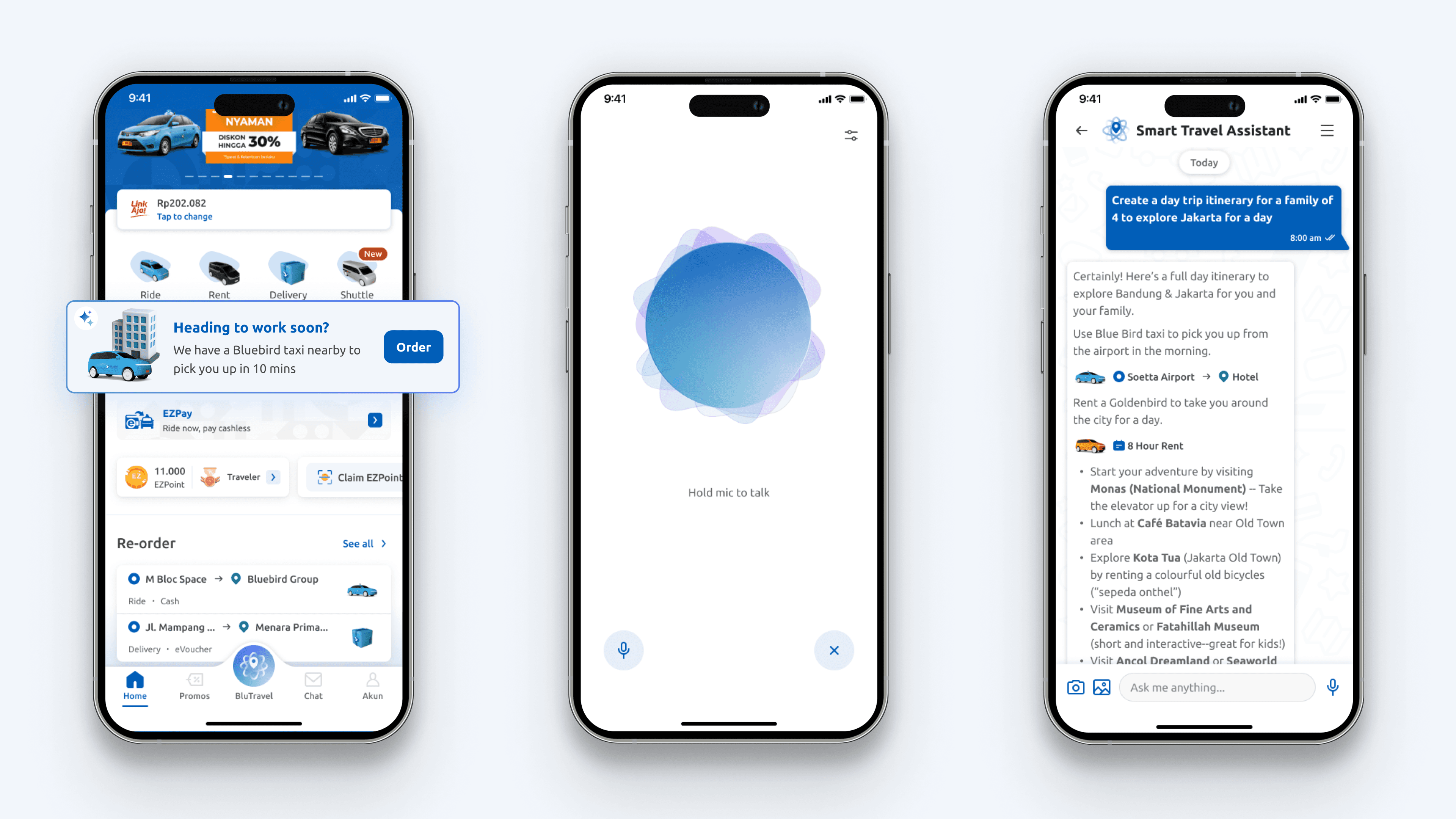
The result was BluTravel — an AI-powered, accessibility-first travel assistant integrated into the MyBluebird app. The solution enables users to plan seamless, personalized, and multimodal journeys while ensuring compliance with WCAG 2.2 accessibility standards.
This project addressed key business challenges, including digital competitiveness, underserved markets, and user retention. My work combined strategic research, accessibility audits, service design, and AI integration planning, showing how inclusive design can drive both impact and innovation.
Disclaimer: This project is solely conceptual and speculative as a part of an assignment at the University of Sydney. The proposal does not imply any association or collaboration with Blue Bird Group.
Role
Design Consultant
Timeline
March - May 2025
Scope
Research, Business Analysis, Accessibility, Strategic Design, Roadmap Planning
Having faced many challenges, such as the emergence of online transportation and COVID-19, Blue Bird managed to come back stronger. In 2024, Blue Bird achieved an around 13% increase in net revenues compared to the previous year.
Company goals
Mobility as a Service (MaaS)
Blue Bird's vision is to become an MaaS operator by integrating companies' mobility products and services through the advancement of technology (SMU Corporate Communications team, 2024).
Sustainability Vision
Blue Bird also aims to foster a sustainable mobility experience by expanding its EV fleet to 1,000 by the end of 2025 (Hadi, 2025).
To achieve the goals, Blue Bird have made some notable improvements, such as:
Constantly improving the MyBluebird app
Encouraging tree planting initiative for every taxi orders made by app
Commitment to increase the number of EVs to reduce carbon emissions
To thrive longer in the industry, Blue Bird needs to stay alert with the technology trend and keep improving.
Everyone will end up disabled at some point in their life, whether it's permanent, temporary, or situational. For instance, a driver being distracted may cause situational blindness, a person with a temporary arm injury may struggle to use their phone, and someone who has recently become blind after an accident may struggle to use an app they were once familiar with. These types of situational disabilities should be taken into consideration when designing a product.
According to Indonesia's Central Bureau of Statistics,
6.42%
of Indonesia's population has some kind level of disability
≈
18.2 mil
people in Indonesia
Among those population, 4 millions of Indonesians have visual impairment.

In Jakarta alone,
2.49%
of Jakarta's disabled population have high commuting activities
265,735
people in Jakarta
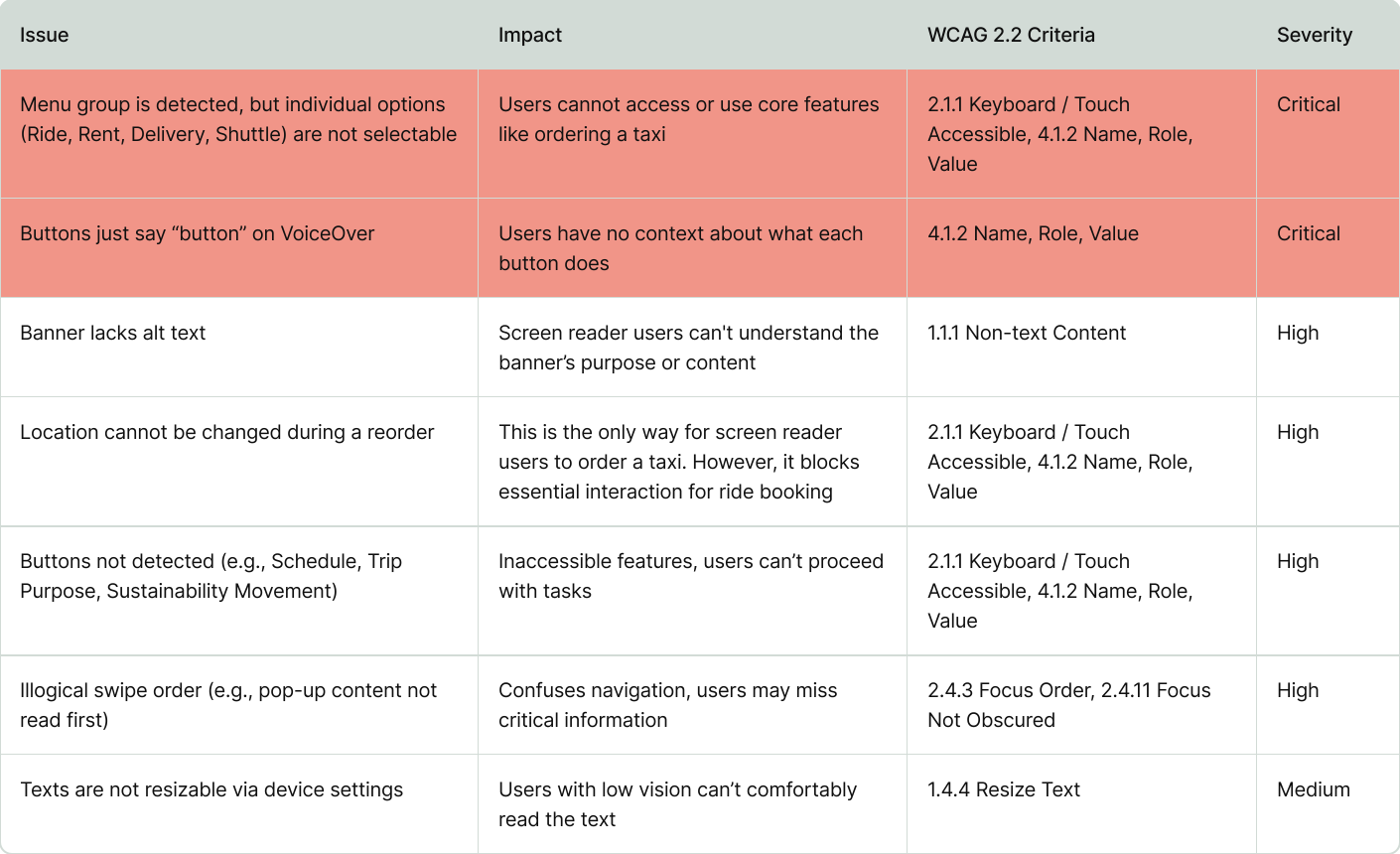
To be considered accessible, an app should at least comply with the Web Content Accessibility Guidelines (WCAG) 2.2 standard
Improving accessibility could unlock the untapped market potential and drive substantial revenue growth for Blue Bird.
Generate significant revenue growth.
Compliance with Law No. 8 of 2016 on People with Disabilities Mandates
Strategic growth opportunity
Expand customer base
Strengthen company reputation & showcase social responsibility
Blue Bird lags behind Gojek and Grab in AI, accessibility, and integrated mobility. Competitors are advancing with inclusive design, multi-modal transport, and AI-driven personalization, while Blue Bird still lacks these features.
The key opportunity is to differentiate by building a personalized AI travel assistant, improving accessibility, and integrating multi-modal journey planning to stay competitive and future-ready.
Problem Statement
From trusted rides to intelligent mobility: Blue Bird must evolve to stay inclusive, competitive, and future-ready.
Introducing BluTravel, an AI-Powered Inclusive Travel Assistant
BluTravel is an AI-powered travel assistant that makes planning, personalizing, and booking end-to-end trips effortless. It integrates multi-modal transport, destinations, and accessibility into one seamless experience within the MyBluebird app.
Compliance with WCAG 2.2
By adhering to the WCAG 2.2 Guidelines, MyBluebird app will have an increased accessibility and compatibility with assistive technologies. People who relies on assistive technologies such as screen reader will benefit from this, primarily those with visual impairment.
To be considered accessible, an app should at least comply with the Web Content Accessibility Guidelines (WCAG) 2.2 standard
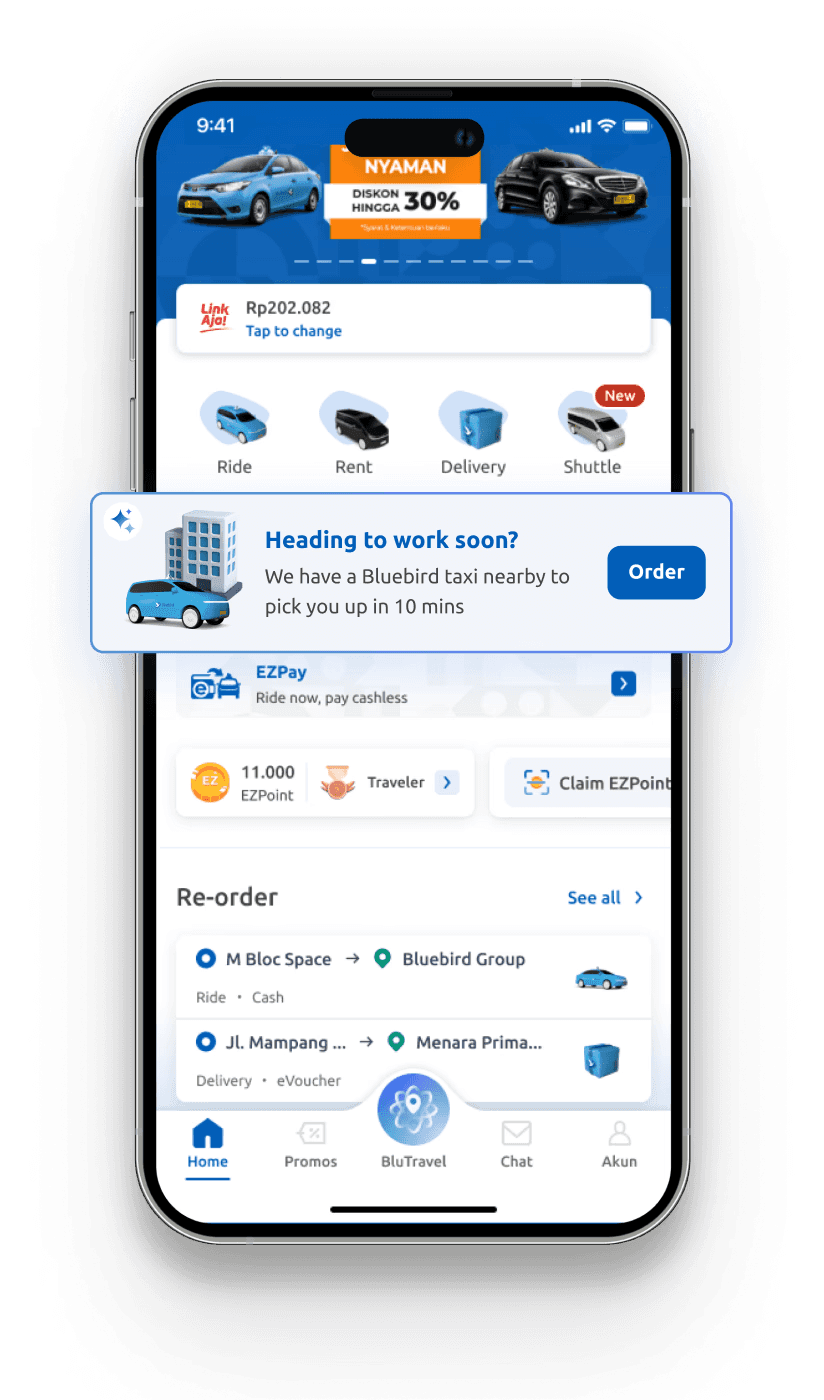
Personalised Experience
An AI-powered feature to create a personalised travel plan.
Trip recommendation for users to generate more orders.
Adding users’ accessibility needs and informing the drivers when they order a taxi.
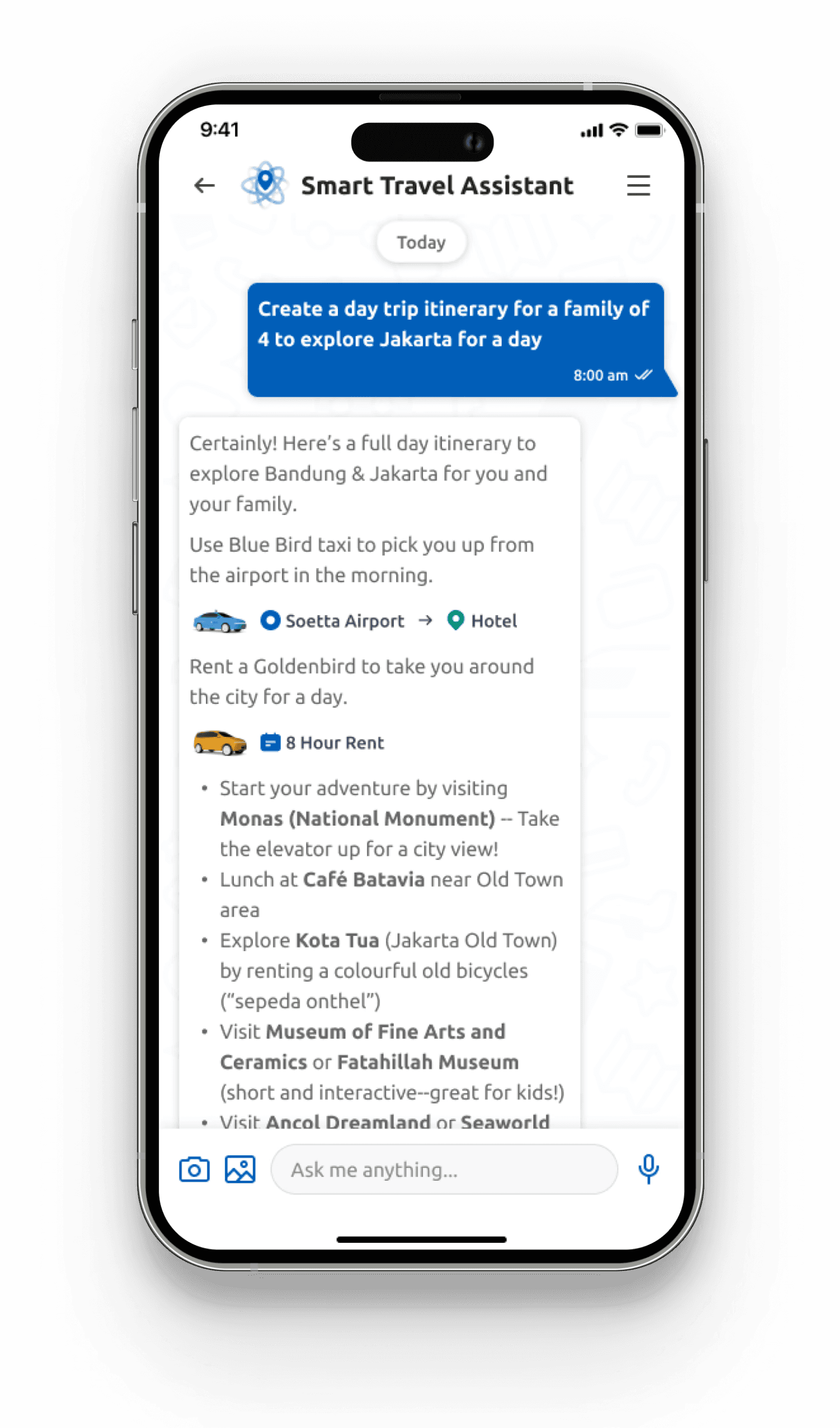
Chat-Based Interaction
Generate a multi-modal order such as combining taxi and public transportation, taxi and shuttle, car rental and shuttle, etc.
A scalable feature that can be integrated with many existing functions in the app and a potential transportation-related partnership.
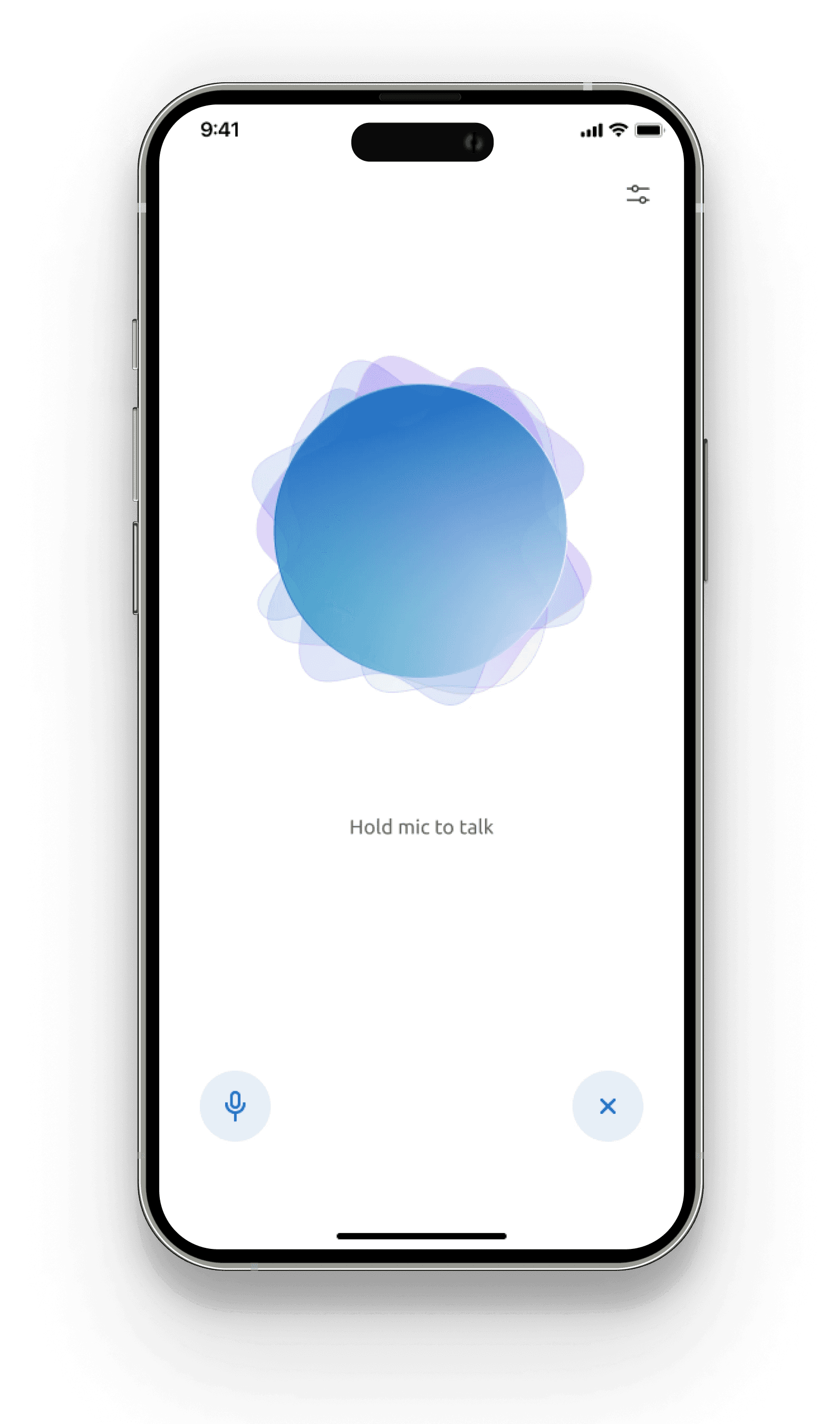
Voice-Based Interaction
Voice-based interaction for a more inclusive experience, not only for those with visual impairments but also helpful for those who are unable to use the app in a situational condition (e.g driving).
Compliance with WCAG 2.2 Guidelines
Designed to allow users with assistive technologies to use the MyBluebird app.
Compliance with the WCAG 2.2 guidance on accessibility.
The process begins with conducting an accessibility audit, creating an accessible design system, and implementing it within the app.
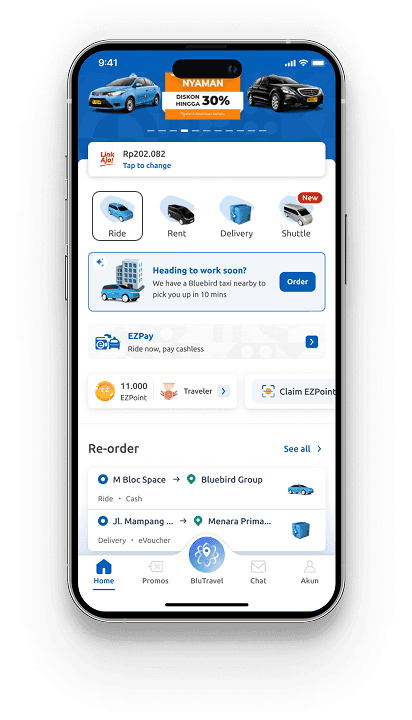
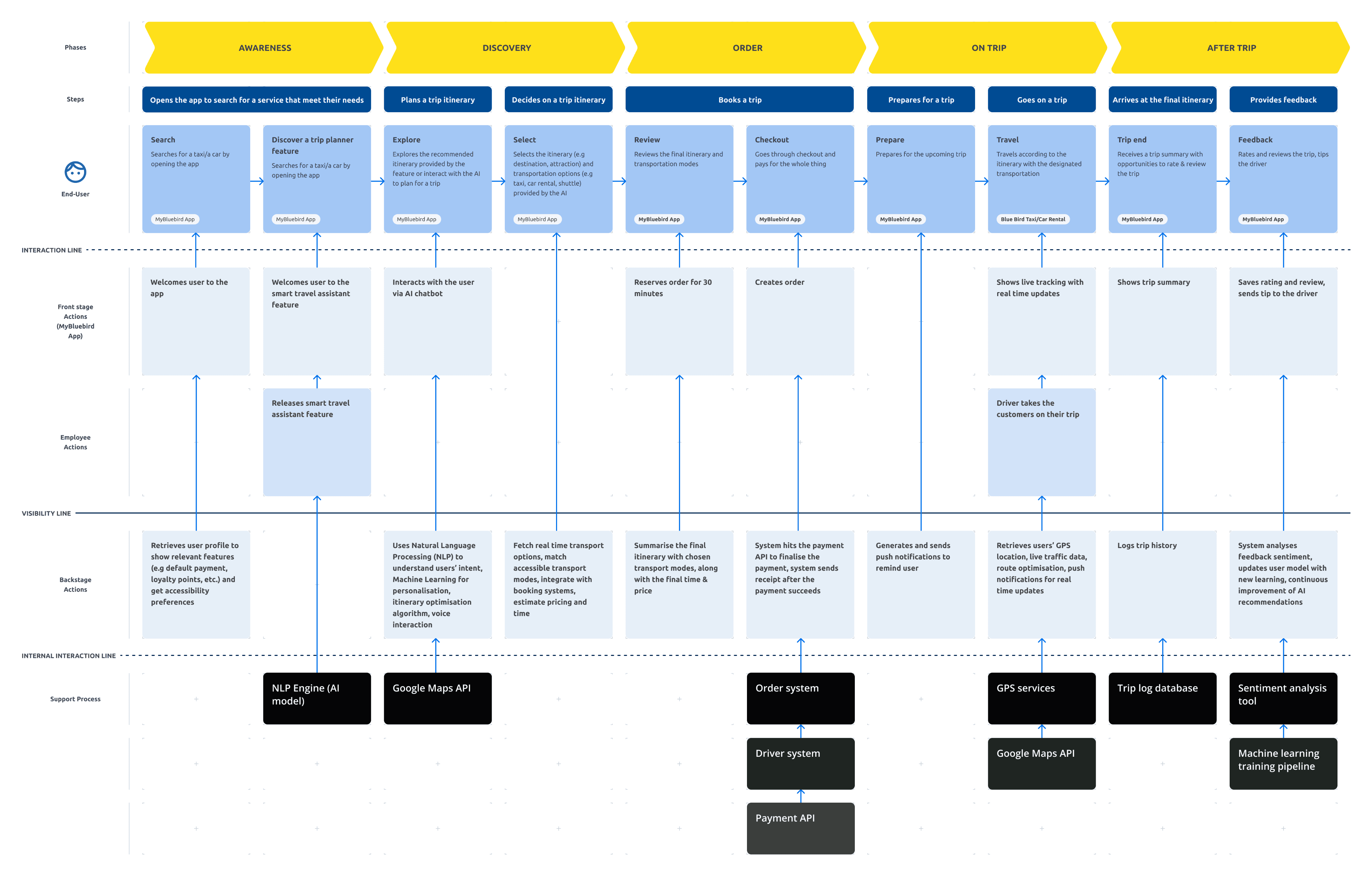
Bringing the Idea to Life
Implementation Roadmap
Phase 1

Integrated multi-modal trip planning

Accessibility audit & developing an accessible design system
Designers, Accessibility Expert, Mobile Engineers, Backend Engineers
Increase # of active users, Increase # of orders, Increase revenue, Data collection
Phase 2

AI implementation for personalisation

Ensure the main feature (ride) meets accessibility standards
Designers, Accessibility Expert, Mobile Engineers, Backend Engineers, AI Engineers
Increase # of newly registered users, Increase # of active users, Increase # of orders, Increase revenue
Phase 3

Conversational UI to interact with AI

Accessibility of other feature (rent, delivery, shuttle)
Designers, Accessibility Expert, Mobile Engineers, Backend Engineers, AI Engineers
Increase # of newly registered users, Increase # of active users, Increase # of orders, Increase revenue
Phase 4

Voice-based interaction with AI

WCAG 2.2 compliance & integration with AI voice-interaction
Designers, Accessibility Expert, Mobile Engineers, Backend Engineers, AI Engineers
Increase # of newly registered users, Increase # of active users, Increase # of orders, Increase revenue
Company
Potential revenue up to IDR ~5.4 trillion from the untapped market
Reinforce brand reputation in the market
Promotes user adoption of sustainable initiatives
Increase customer loyalty and engagement
Customers
Personalised and customised experience
Feeling accepted due to accessibility
Saves time and energy for trip planning
Stakeholders
Strengthen partnerships through value-aligned innovation
Compliance with Law No. 8 of 2016 on People with Disabilities Mandates
Integration with other public transportation
Enhance tourism with smarter travel design
Potential Risks
Data privacy
T&C-based consent restricts user choice and raises ethical issues
Developing AI models risks environmental impact, opposing Bluebird’s sustainability mission.
Mitigation Plan
Ensure transparent and ethical communication of data use.
Provide limited AI access for users who withhold data consent.
Incentivise consent with loyalty points to encourage ethical engagement and retention.
Train the AI model with sustainability in mind, e.g., develop an efficient algorithm, and use the AI to optimise Bluebird’s sustainability movement.
Opt for renewable energy to avoid excessive electricity consumption, e.g using solar panels to power the head office.
BluTravel is not just a feature, it’s a strategy to future-proofing the brand for the next era of mobility
This project was a valuable opportunity to apply design thinking at a strategic level, using accessibility as both a user-centred goal and a business differentiator. It strengthened my ability to advocate for inclusive design within corporate environments, aligning human needs with organisational objectives.
If allowed to re-engage with Blue Bird, I would propose this solution as a roadmap for inclusive innovation and sustainable digital transformation.